Genie: Pre check-in & Post check-out journeys

How I designed the pre-arrival and post-checkout experiences for a boutique hotel app. These are the two windows where a guest decides whether the hotel is worth returning to, and where most hotels go quiet. This is where we designed Genie to stay present.

Role
Product Designer
Timeline
1 month
Team
Product Designer (me), Product manager
Scope
Problem framing, user flows, UI, handoff

Luxury hotels that use genie as their guest experience app

Cook's Club, Steigenberger, Casa Cook, Ancient Sands, Marina Hotels, and Envi — hotels that use Genie
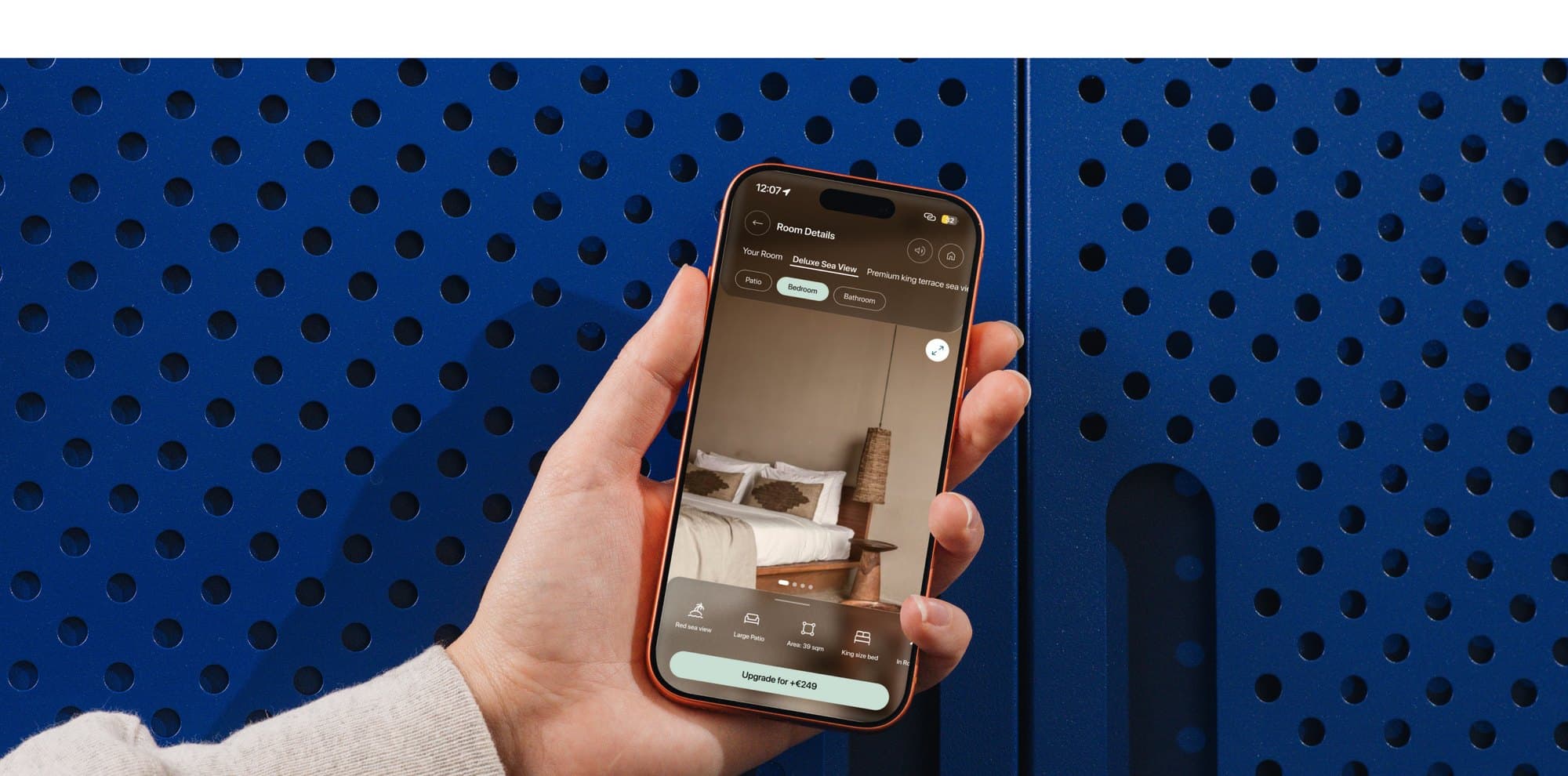
A guest holding an iPhone showing the redesigned Genie pre-arrival room screen

Project Overview

What is it

Genie is an in-stay app for luxury hotel guests. This project extended it beyond the stay itself into the two windows on either side: after a booking is confirmed but before arrival, and from the last night of a stay through checkout and beyond.

The problem

Both windows were dead time. A guest booked, then waited. A guest checked out, then vanished. Nothing was asked, offered, or remembered in either gap, so revenue and loyalty leaked from the exact moments that decide both.

What I did

Designed the full pre-check-in and post-checkout experiences across every property. Built a seven-step pre-arrival flow, a swipe-based preference capture, an AI itinerary builder, and a post-stay layer covering tiered feedback, a shareable Stay Memoir, and lost-and-found.

Why it mattered

The goal was to turn two silent windows into active ones, which meant pre-arrival revenue while intent is high, and feedback and reviews captured before the emotional peak of the stay had faded.

Meet Alexander, our guest

Alexander — an illustrated portrait of the guest this project was designed for

Before any screens, I anchored everything to one guest.

Alexander is 34 and lives in London. He books 3–5 boutique stays a year. He researches obsessively, shares everything publicly, and remembers every detail. He chose this hotel over four others.

His fear

Paying a premium and still feeling like a number.

His quiet truth

He starts composing his review the moment he books, and he decides whether to post it in the hours around checkout.

The one question behind every decision

What does Alexander wish the hotel had done before he arrived, and what would make him talk about it after he left?

Problems that exist

01

Dead pre-arrival window

The gap between booking and arrival was inactive, so upgrade and service intent went unused while it was highest.

02

Manual arrival logistics

Transfers, SIM cards, and meet-and-greet were arranged by phone at the last minute, pushing coordination onto the front desk.

03

Upgrades decided too late

Room upgrades surfaced at the front desk under time pressure, the worst possible moment to consider spending more.

04

Feedback captured too late

Email surveys landed days after checkout, once the emotional connection had faded and response rates had dropped.

05

Preferences collected late or never

The hotel learned what a guest wanted in person, if at all, so nothing was prepared in advance.

06

No service recovery window

Unhappy guests left with no way to be heard, then posted public reviews the hotel never saw coming.

07

Happy guests never asked

Guests willing to leave a great review were never prompted in the moment it would have taken one tap.

08

No branded takeaway

The stay left nothing to keep or share, missing the most credible word-of-mouth the hotel could get.

Solutions

Turning the wait before arrival into a service window.

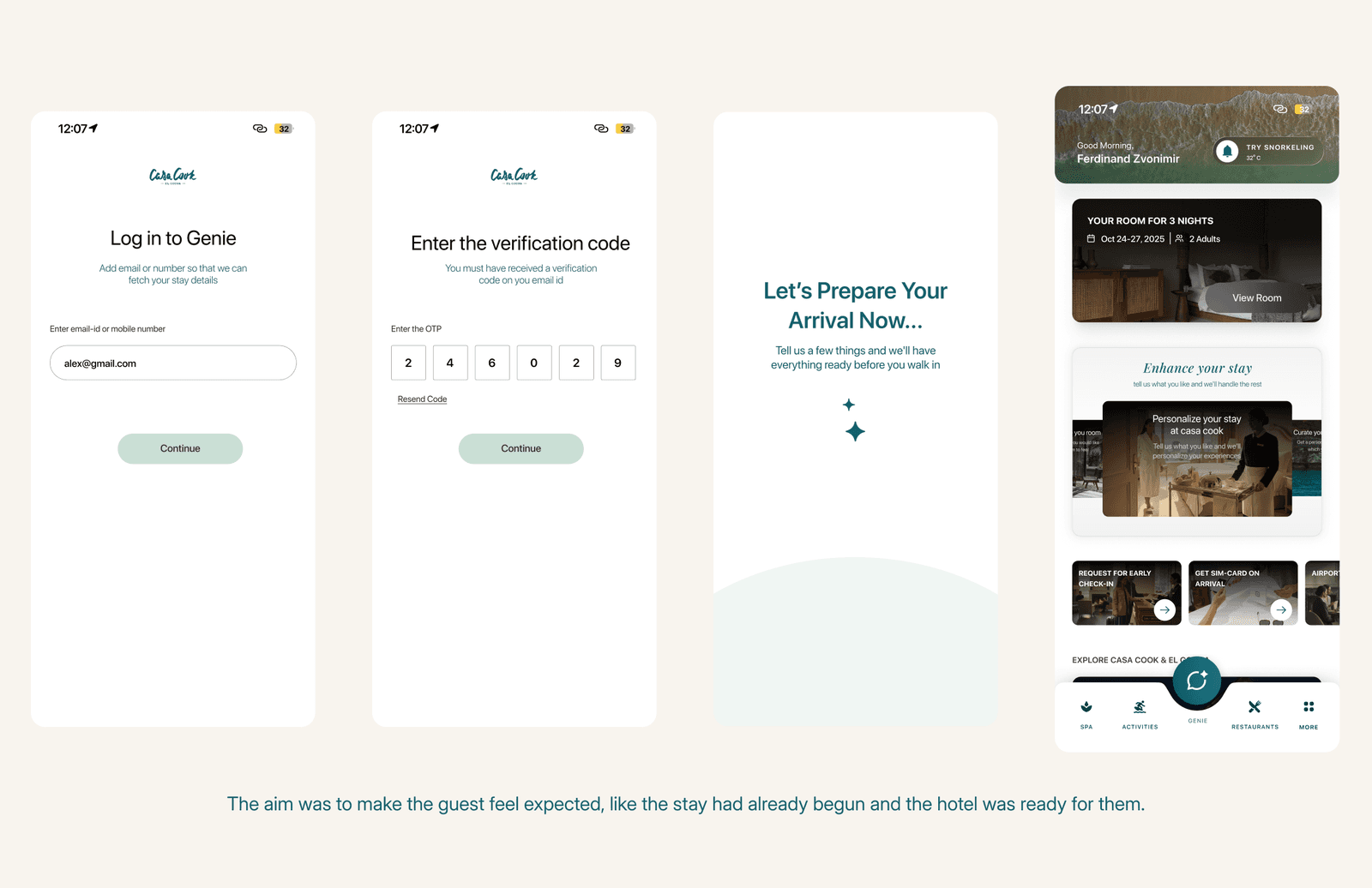
After booking, the guest gets a WhatsApp message and lands on a pre-arrival home screen that opens with a greeting, their confirmed room, and three sections in the order a guest actually thinks about a trip: the room, Enhance Your Stay, and the arrival logistics grouped as things they might need.

Turning the wait before arrival into a service window.

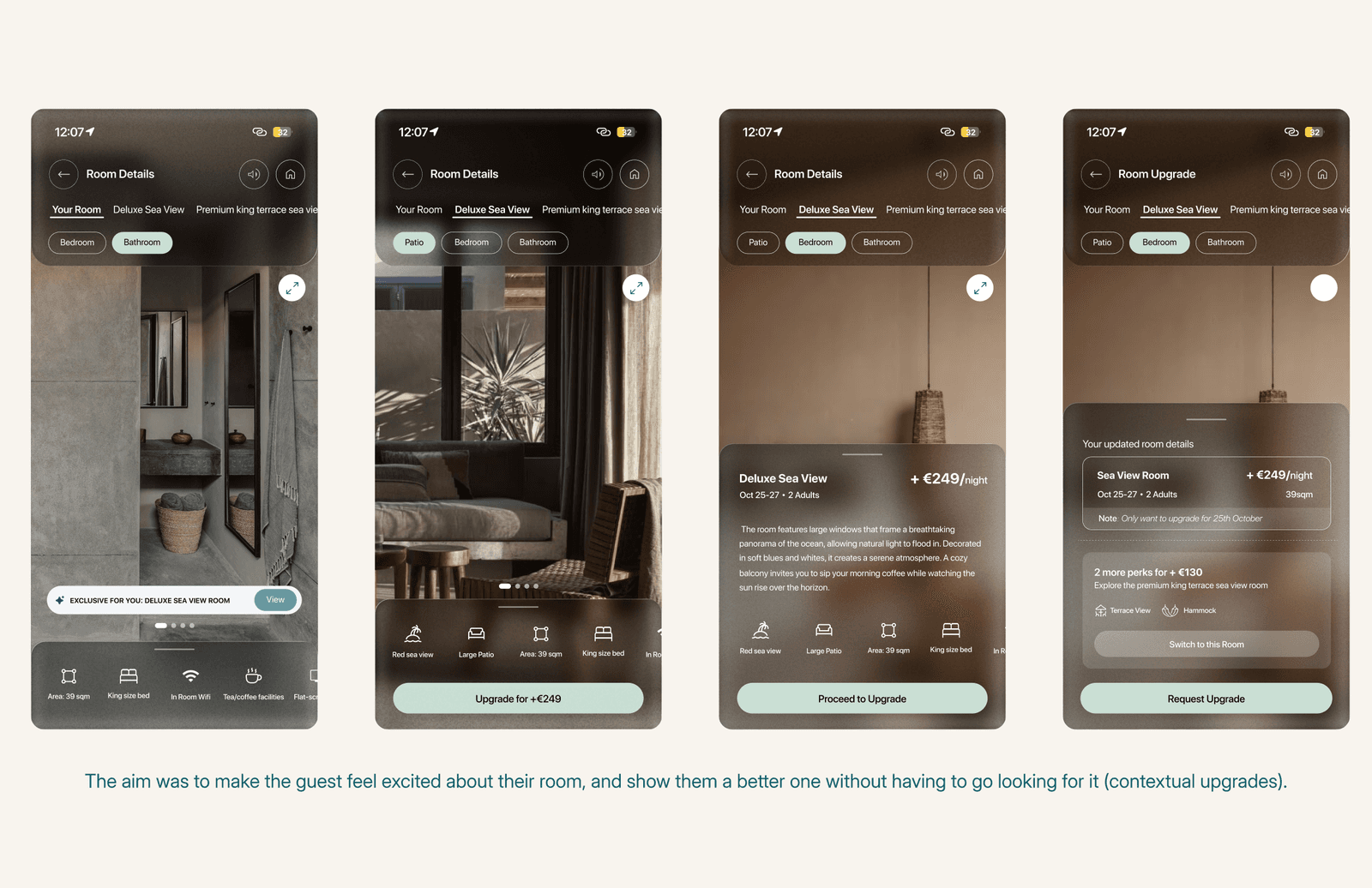
The room

The first thing offered is the room. A guest opens their booked room and browses it by space, moving through tabs for the bedroom, bathroom, and patio with a full-bleed photo carousel and an amenity strip underneath. If an upgrade exists for their dates, a nudge sits at the bottom of their own room view, "Exclusive for you: Deluxe Sea View", pointing them to the best-matched upgrade rather than making them hunt.

The room

Enhance your stay

The second section holds personalization. Personalize Your Stay is a swipe flow: activity and food cards, right to like, left to pass, with the copy setting the frame, "Tell us about you, and we will remember throughout your stay." Only likes are stored, so the hotel learns what a guest enjoys rather than a list of exclusions, and the encouraging line at the bottom shifts as they go.

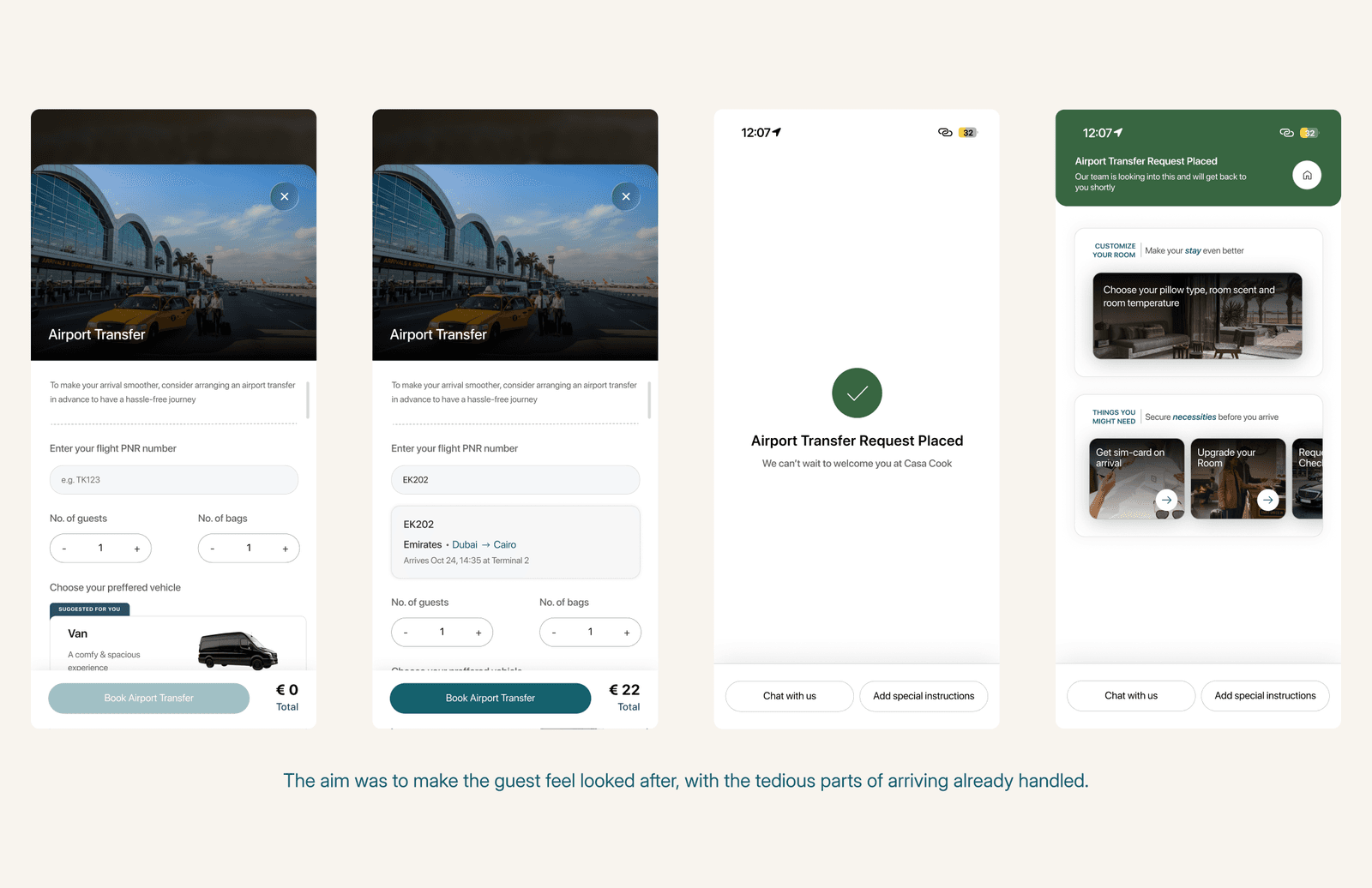
Things you might need

The third section handles arrival logistics: early check-in with an arrival-time picker, a SIM card on arrival with tiered plans and a delivery location, an airport transfer keyed off a PNR lookup that resolves the flight and suggests a vehicle for the party size, and a meet and greet with optional luggage or wheelchair assistance.

Things you might need

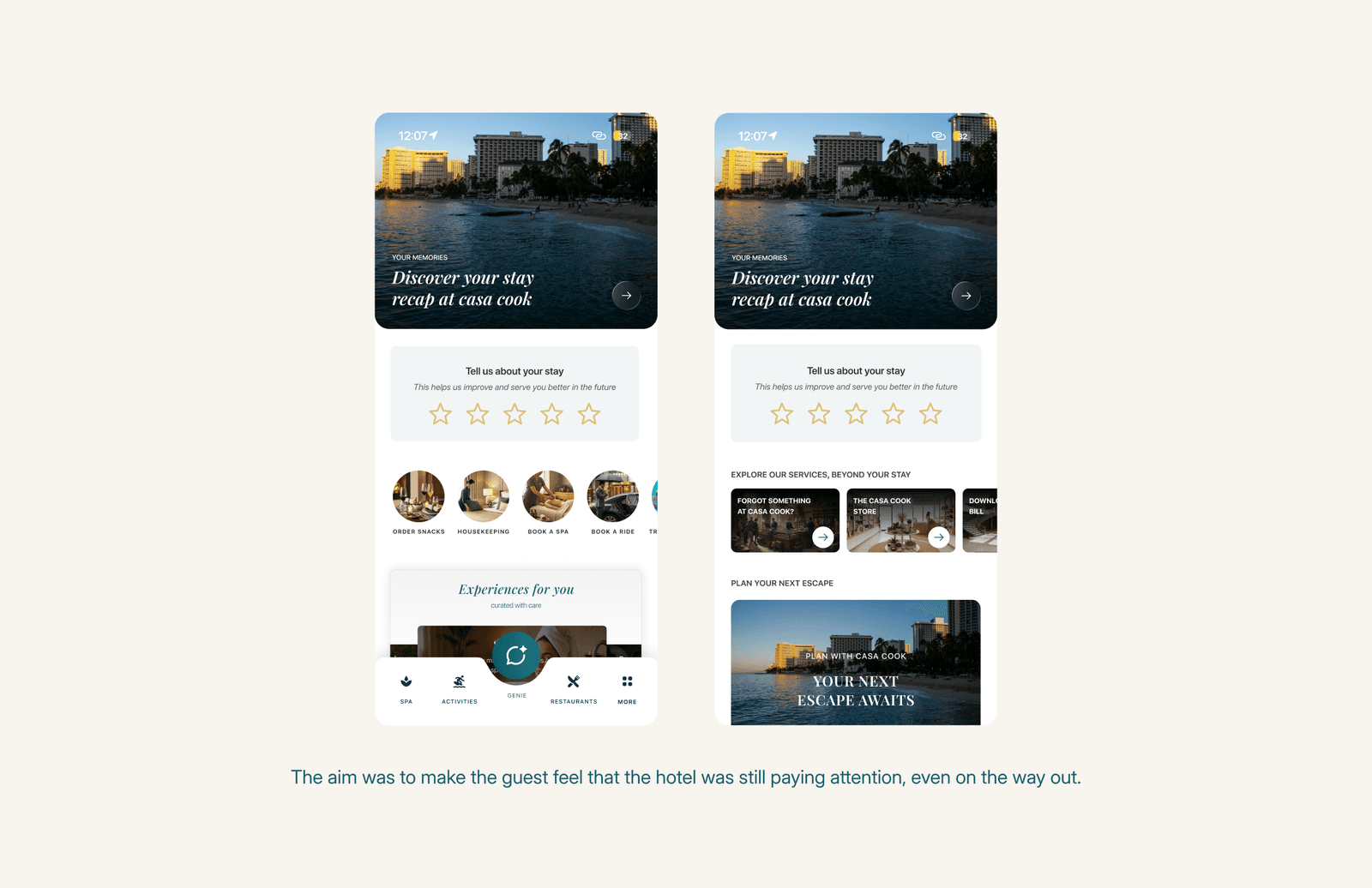
Keeping the relationship open through checkout and beyond

The home screen moves through two states. Pre-departure activates at 8 PM on the second-to-last night; checkout day activates on the morning of departure. The night before, the Stay Memoir hero and a feedback card appear while in-stay services stay reachable. Checkout morning, services drop away and departure tools take their place: Forgot Something, the store, the room bill, and Plan Your Next Escape.

Keeping the relationship open through checkout and beyond

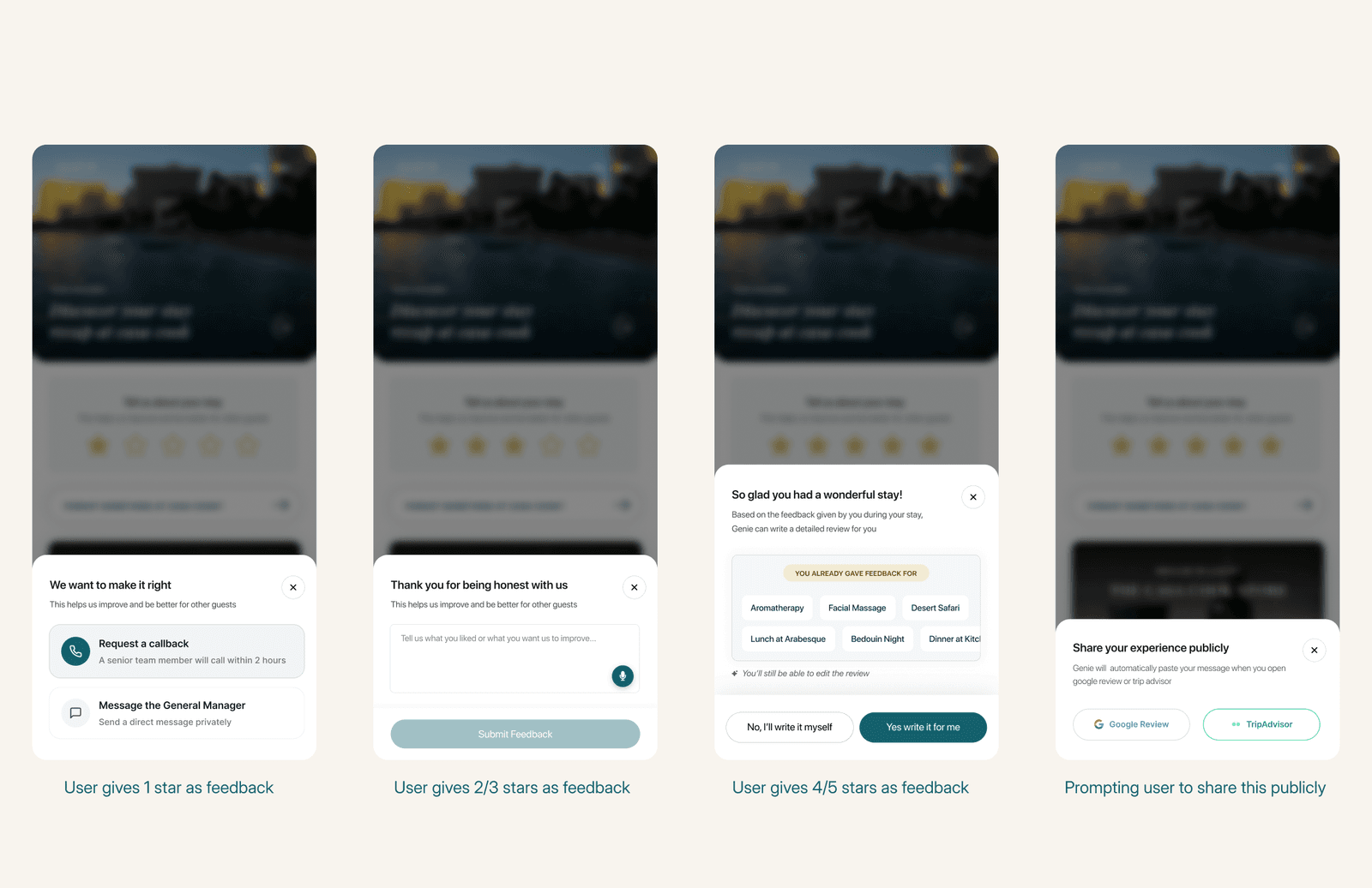
Feedback

Feedback is the pivot, and it branches because a one-star guest and a five-star guest need opposite responses.

Feedback

Stay Memoir

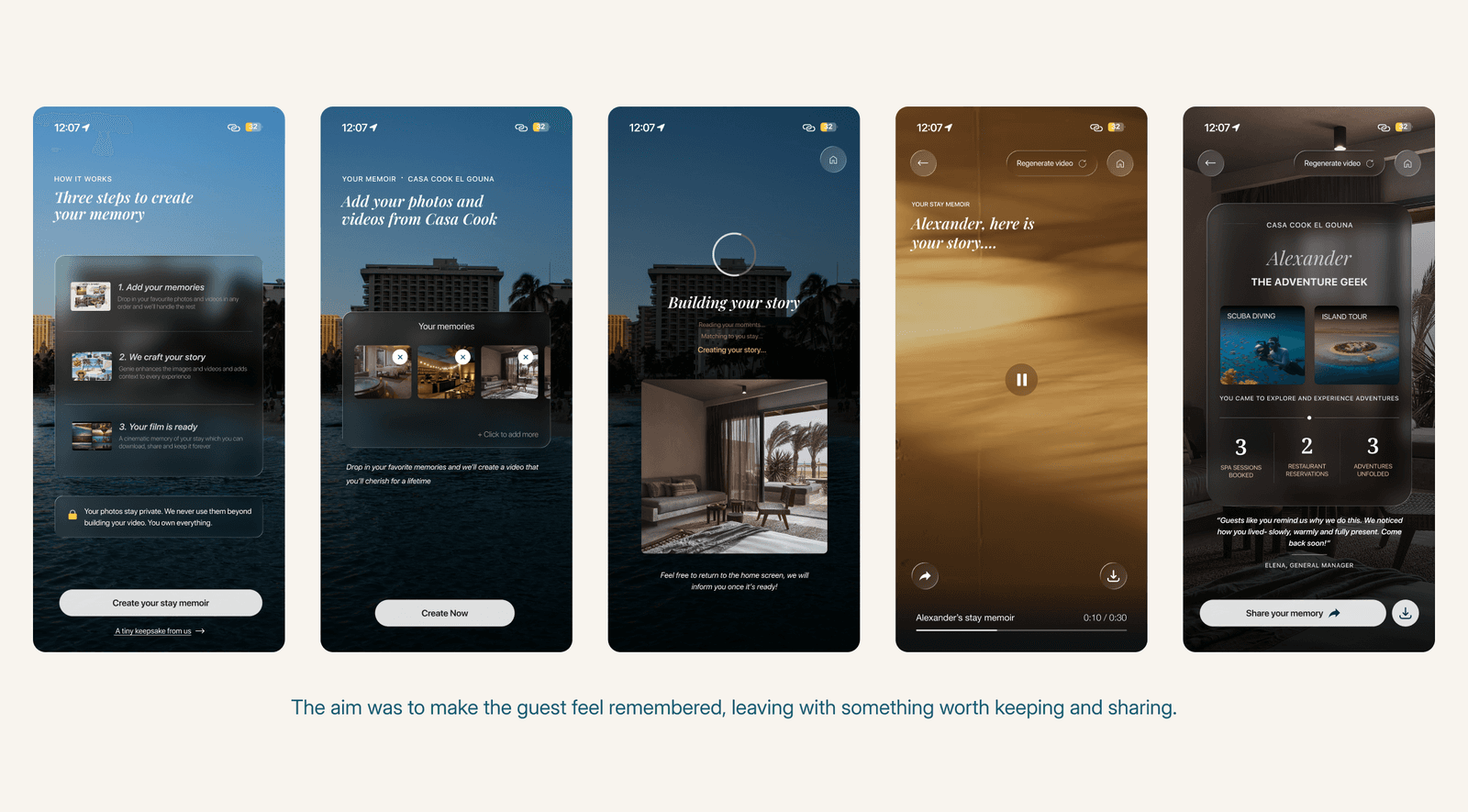
The Stay Memoir is the takeaway. A three-step intro explains it, the guest adds photos and videos from their stay, and the app builds a short film. It gives the guest something to keep and gives the hotel its most credible marketing: a real guest's memories, shared in the guest's own voice.

Stay Memoir

My entire process

01 · The foundation

The Core Inequality

A guest completes pre-check-in only when personal benefit, trust, and momentum outweigh perceived effort and doubt. Every screen must balance this equation.

02 · Constraint · Friction

Designing for effort

How long will this take? How much to type? The flow leans on scanning, pre-fill, and single taps, signaling a two-minute length up front to overcome doubt.

03 · Constraint · Architecture

The Three Layers

Compliance is mandatory. Preparation creates operational readiness. Monetization sits safely on top, working only because it doesn't lead.

04 · The mechanism

Pressure-testing the flow

I built the flow as seven steps and tested each against four strict questions. Forcing the "why" and the impact is what kept the revenue layer honest. Personalization had to earn the upsell.

The four lenses

Guest viewGuest actionSystem actionMutual value

05 · Extension

The Post-stay Spine

Post-stay required a separate exercise with its own logic: four core modules comprising Utility, Feedback, Memory, and Retention.

06 · The outcome

Temporal Mapping

The UI shifts deliberately across three moments. Night before, the hotel feels present. By checkout morning, the screen stops offering things to do and starts offering things to close out.

Night beforeCheckoutPost-stay

My learnings

  • Pre check-in and post check-out are two crucial points in a guest's journey that have usually been under utilised in such hospitality products. The stay matters to the guest before they arrive and after they leave, so the product should too.
  • Revenue lands better when it sits on top of a service. Instead of leading with upgrades, I decided to lead with a flow that's built around the guests and their needs.
  • I understood the importance of clear and empathetic copy in such flows. Users always read to scan a screen and it's crucial to gain their trust through the messaging.
  • The decision to add a stay memoir was to genuinely show the guest that the hotel truly knows and cares for them, capturing their moments and allowing them to create a memory worth sharing and remembering.